Monday, November 20, 2006

Convenient paradoxes?


Life is a paradox, they say.

Well, here are TWO paradoxes

1. I just watched Al Gore’s documentary An Inconvenient Truth, from 10,000 metres above ground as I was flying between Thailand and New Zealand today;

2. The airline company was Emirates, and it was a pleasant surprise to see that they were showing the film, because freedom of environmental information is relatively scarce in the United Arab Emirates, especially as far as Climate change is concerned.

At the end of the film, the producers have inserted in the credits section things that viewers can do themselves about Climate change (Global warming as they say in the US). One of these captions says something like “tell everyone around you to go see this film”. I think that’s right; Al Gore and his team have done a good job. Everyone should see it. Go!

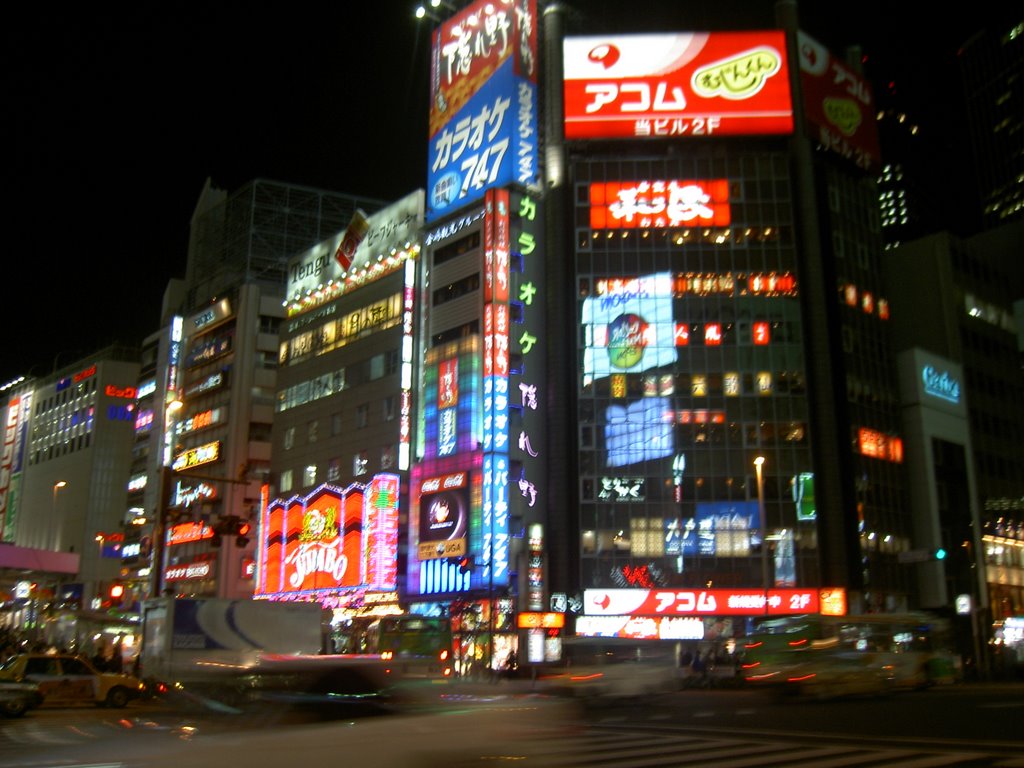
The photo that illustrates this piece is not a particularly good one, but it is relevant. I took it last week in Tokyo. Like in many other cities, the neon that “lights” (or blinds?) the city is spectacular, and in some sense glamorous. But as I was walking through the streets of Tokyo by night, I could not help thinking of the paradox whereby increasingly public authorities are deploying educational tools to convince ordinary people to switch off lights, computers or TV sets when they are not needed, while corporations keep wasting energy to sell all sorts of junks (or only to reaffirm their presence). Of course everyone has a role to play and individual gestures by ordinary people count, but why aren’t governments using their regulatory power to also switch off unnecessary street advertisement lightening? I remember that in 1973, as soon as the first oil crisis took place, governments (at least in France, where I lived at the time) were very prompt in banning neon advertising. [Then they built, in France at least, a massive number of fully subsidized nuclear power plants, and commercial neon lightening came back...]. Well, now there is another fuel crisis called Climate change, let alone other contemporary and forthcoming concerns over the security of energy supplies.

Coming back to Al Gore’s film, the fact that it was shown in a passenger aircraft reminds me that the Kyoto Protocol does not cover the international emissions of civil aviation (nor shipping). This is more than a paradox. With the rate at which civil aviation and international trade are booming, this seriously undermines the spirit and goals of the UN Framework Convention on Climate Change and of Kyoto. No wonder that so many industries that are heavy energy consumers are dragging their feet with the Kyoto targets, if they see that civil aviation and shipping (energy consumers by excellence) are getting away with an exemption, which represents in effect the equivalent of a huge hidden subsidy.

As the Climate policy community is in the middle of the negotiation of the Kyoto 2 agreement that needs to be in place in 2012 once the first Kyoto Protocol commitment period has passed, the environmental integrity of the international Climate regime would be severely undermined if it continued to ignore the need to reduce with binding targets international greenhouse gas emissions from commercial vessels and aircraft.

Sunday, November 19, 2006

Blame Canada (and España)


On the eve of the UN General Assembly's decision next week to adopt (or not) an interim prohibition or a moratorium on highseas bottom trawling , Greenpeace have put out a very funny video.

Watch it now, and take action. Now (after next week it will be too late).

If the style of it is not yours, show it to your kids; I'm sure they'll join the campaign, and also convince you (and their friends) to sign the online petition.

If the UN General Assembly does not take action, it will primarily be because of Canada's and Spain's obscure manouvers in the corridors in Brussels and New York.

Wednesday, November 15, 2006

Reality meets fiction


No, this photo is not taken from a trailer of the next Star Wars movie, no!

It is a model of one of the floating nuclear reactors under construction in Russia, an issue we have discussed several times Chez Rémi.

I am posting this piece from Tokyo where, as part of an environmental scoping mission I am doing, I visited the office of Greenpeace Japan.

There, I had the pleasant surprise of running into Anne Dingwall (a Greenpeace veteran who presently works in the Greenpeace Japan office), who just sent me the article with this photo published in Popular Science, after I told her that I think everyone should pay greater attention to the development of floating nuclear reactors. Anne was obviously intrigued, did a google search, and found the article with this great photo.

Anne spent her entire life in Greenpeace. She's been everywhere kicking asses (as they say in her Canadian country town) from Antarctica to the Amazon where she lived for several years, from China to Russia where she ran the Greenpeace office during Gorby's Perestroika, etc.

I am glad she's intrigued by these floating nuclear reactors, because if someone can pull off a team to kill that project, it's her!

Saturday, November 11, 2006

Spanish fishing industry impact on shark populations exposed


Oceana have got an excellent story: "Spain destroys the shark populations" in Spain's leading newspaper El País today.

Footprint in the deep sea


We all know that the European Union claims to be at the forefront of efforts to improve international environmental governance. We always hear European leaders also say that they want to reduce the EU's global environmental footprint.

So why at the same time is the European Union preventing the adoption this month of measures to protect the deep ocean against destructive fishing?

Last week, together with Russia and South Korea, the European Union blocked the adoption of measures to protect the deep sea in the South Pacific.

And at the UN in New York, the European Union continues to be hostage of the interests of few Spanish trawlers. The long awaited decision on a moratorium on high seas bottom trawling expected in a couple of weeks now largely depends on what the European Union and Canada will do.

I have just signed Greenpeace's online petition to the European Union. [Canadians can also sign the Living Oceans online petition.]

It only takes a few second to sign, to protect cold water corals that have taken thousands of years to grow.

Friday, November 10, 2006

Decreto asesino


Es curioso como Esperanza Aguirre, la neocon que ostenta la Presidencia del Gobierno de la Comunidad de Madrid, se ha empañado en hundir con un decreto asesino la Ley Anti-Tabaco aprobada (¡unánimemente!) hace menos de un año por el Congreso de los Diputados.

[En Francés, el neologismo neocon se pronuncia neoconne. Muy oportuno]

Los no-fumadores, somos la mayoría. Claramente. Pero estamos de nuevo indefensos ante Esperanza Aguirre y sus amigos de las empresas tabaqueras y la irresponsabilidad del gremio de la hostelería.

Esperanza es desesperante.

Hace tres años y medio, durante el proceso de negociación del Convenio Mundial sobre el Control del Tabaco de la Organización Mundial de la Salud (OMS), Varda Group recibió el encargo de desarrollar unos mensajes a favor de la adopción de dicho convenio, frente a la campaña de la Administración Bush contra esa iniciativa de la OMS.

Era el año 2003, precisamente aquel invierno cuando los neocons americanos y españoles se declaraban tan preocupados por aquellas armas de destrucción masiva que no existían. Por eso preparamos en tres idiomas este mensaje gráfico provocador, que se publicó en el International Herald Tribune el día de la apertura de la Asamblea Mundial de la Salud en Ginebra.

Se estima que en España hay 50.000 muertes anuales por el consumo (directo e indirecto) del tabaco. Lo grave es que inevitablemente, con Esperanza Aguirre la proporción de madrileños afectados aumentara.

Tuesday, November 07, 2006

My vote


Although he is affecting my life and my environment more than Jacques Chirac and Jose-Luis Zapatero combined, I can't vote against him today.

So, I thought I would upload this photo instead.


Monday, November 06, 2006

Climate solution


With the so-called Climate Summit starting today in Nairobi, I have changed my usual photo on top of the right-hand column of Chez Rémi, and put one with my photovoltaic solar panels instead.

My 36 solar panels are connected to the grid, to which I sell the clean electricity which I produce. Yesterday, I sent to the electricity company my invoice # 66. Sixty-six months selling clean energy, not bad.

It entails a bit of paper work (invoicing, VAT, annual production reporting to the Industry Ministry for their statistics, etc), but not more than the paper work you have to go through for owning a car, really. And the initial investment I made nearly 6 years ago was not more than the price of a new car (maybe less, depending what kind of car you're talking about). One basic difference is that after six years, a car would be almost good for scrap (and it would be consuming fuel), whereas my solar installation has a twenty year guarantee from the manufacturer and it's producing fuel, not spending it.

Many people ask me about maintenance. Well, there has been practically none in those five and a half years. If there has been a thunderstorm it's wise to check the fuse (like with any electric installation); in summer when the air gets dusty it's a good idea to spray the panels with water from time to time to maintain production at an optimum level; in autumn I've got to remove a few dead leaves from nearby trees now and then. That's it, I can't think of anything else so far.

It's good to feel part of the solution. It can even be fun. And economic.

Sunday, November 05, 2006

Paying for destruction


The study published in Science a few days ago, in which an international team of scientists warns that all global fisheries will have collapsed by 2047 if current fishing practices continue, has obviously had an impact.

I have read a good editorial about it yesterday for example in El País, the leading newspaper in Spain (the country that is still largely driving the EU's fishing policy). I have also read good pieces in Le Monde , the Financial Times and the New York Times.

But whether governments will immediately take notice remains to be seen.

I read recently that according to the UN's Food and Agriculture Organization (FAO), Governments (read: we) are subsidizing the fishing industry with US $ 54 Billion per year, the majority of which are environmentally destructive; the World Bank estimates fisheries subsidies between 15 and 20 Billion per year; I read another estimate of 30-34 Billion per year, and WWF uses the figure of 15 Billion. The discrepancy reflects the difficulty in tracking subsidies, including indirect subsidies, and the lack of transparency which often goes with them. Nevertheless, whatever way you look, it's always a lot of billions (with a b), the majority for destructive purposes. Eliminating them would thus make a lot of sense.

The UN General Assembly's decision on the long awaited moratorium on high seas bottom trawling later this month will also be a good opportunity to test political will.

And of course, it will be interesting to see what the European Union Fisheries Ministers make of scientists' recommendations when they decide next year's fishing quotas.

Like so many environmental issues, this one requires a combined response from politicians and consumers. In order to make consumers' response real, we need more tools like Fishonline and Seaweb's Seafood Choices Alliance.

But these tools must be adapted to the diets, tastes and traditions of key fish consuming countries.

Thursday, November 02, 2006

Buy a whale


I was just speaking with Leah Garcés of the World Society for the Protection of Animals (WSPA).

She apologised that our scheduled conference call was going to be interrupted, because the press has not stopped calling her all day, in relation to WSPA's bid for a whale's life on e-bay, which they launched today.

E-bay bid for a whale's life? How does this work, I asked?

Very simple:

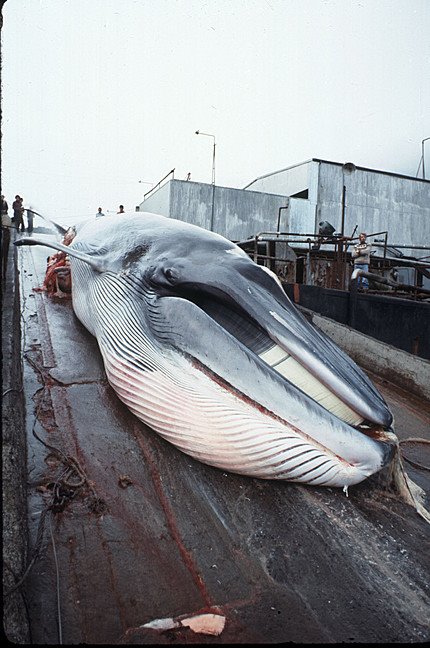
The market price of a fin whale (like those killed in Iceland by the Hvalur HF company) is estimated at around US $ 180,000. So WSPA is inviting the public to re-buy a whale.

Once the bid is closed, WSPA says that they will offer the proceeds to the Icelandic government, if they agree to proportionately reduce their whale catches.

I am typing this while Leah is making a radio interview. She'll call me back after she's done, to continue our conversation. But it's such a good creative campaigning idea that I'm sure we will probably be interrumpted endlessly.

Wednesday, November 01, 2006

IWC: time for a heart transplant?


The presentation and public release in Reykjavik today, by 25 countries, of a Joint Demarche protesting for the recent resumption of commercial whaling should remind to the pro-whaling group of IWC member nations that they are unlikely to ever regain the three-quarters majority that would be required under the provisions of the International Convention for the Regulation of Whaling (ICRW) to allow a resumption of commercial whaling.

The governments of Argentina, Australia, Austria, Belgium, Brazil, Chile, the Czech Republic, Finland, France, Germany, Ireland, Israel, Italy, Luxembourg, Mexico, Monaco, the Netherlands, New Zealand, Peru, Portugal, the Slovak Republic, Spain, Sweden, the UK and the US as well as the European Commission, who have all signed this Demarche are right to say that Iceland is undermining the international whaling regime which they pretend to support.

The current situation whereby Japan, Norway and Iceland are acting almost as if there was no moratorium on commercial whaling under international law is bad news for anyone concerned about good stewardship of the global commons.

In a recent statement, the French Government calls for "a true debate within the IWC on which changes to its convention are needed so that it becomes a modern international instrument for the conservation of cetaceans."

France is right to call for such a debate. But whether it should and could take place within the IWC remains to be seen. Maybe it is from outside the IWC, at least in an initial phase, that the debate should be triggered, if the goal is to break the current impasse the IWC is locked into.

The ICRW to which the French government refers was adopted in 1946. It reached the age of 60 this year. During this time it was amended only once. This was fifty years ago, when new provisions for the exchange of observers on board factory ships and a new definition of "whale catcher" including helicopters, were adopted in 1956.

In 2009, the IWC which came into being when the Convention entered into force (in 1949) will also reach the age of 60.

Perhaps a good age for a heart transplant.


Wednesday, October 25, 2006

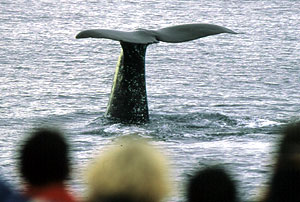
Hunting whales with a boomerang


I read that the resumption of commercial whaling in Iceland is already having a boomerang effect on the country's tourist industry: whalewatching operators (whose business is to bring tourists to encounter and enjoy whales alive at sea) are complaining that the decision is hurting them already.

Hardly surprising.

In the three-part series that I wrote three years ago on Iceland, Greenpeace and Whales, where I described the first voyage of the Greenpeace ship Rainbow Warrior in which I took part in 1978, I explained how in those pioneering times already we proposed the substitution of whaling by whalewatching:

"On first visiting Iceland we proposed that the whaling industry could be replaced by a whale-watching industry for tourists. Living whales can bring as much money, or more, and for longer, than dead whales, we said in a genuine attempt to change the mind-set. Like all visionary and ground-breaking thoughts, it was a laughable one at the time, and we were treated like weirdos: the weather in Iceland was not suited to taking tourists out to sea, they said; this was not the Canary Islands or the Caribbean. So I was pleasantly surprised the last time that I visited Reykjavik, in 1998, to see that there was a flourishing whale watching industry in the country. On hotel reception shelves, the old post cards of the Hvalur whaling station were replaced by post cards showing whale watchers taking pictures of living whales blowing on the surface of the sea. Whereas in the 1970s, tour operators would take visitors to the whaling station to photograph themselves and their children beside dead whales, they were now taking them to photograph themselves with living whales. Ideas which are ahead of their time will always be laughed at".

Whalewatching which has now boomed all over the world, including in the High North, is a new sustainable reality which the Icelandic and other governments should take notice of more seriously. Whalewatching operators have a right to claim that whales belong to them at least as much as to the whalers.

When two different activities compete for the same resource, the responsibility of governments is to protect the interests of the one that brings more shared benefits to the whole community. And the least damage.

The whaling industry has been claiming that the moratorium on commercial whaling undermines the 1946 International Convention for the Regulation of Whaling (ICRW), the founding treaty of the International Whaling Commission (IWC). But if you read the Convention carefully you will see that it seeks the conservation, development and optimum utilization of the whale resources (Article V2). Of course, back in 1946 whalewatching was not an option. But today can't it be argued that whalewatching represents the optimum utlization of the whale resources?

Tuesday, October 24, 2006

Heima hjá Rémi


The title of this blogpost means Chez Rémi in Icelandic.

My friend Arni Finnsson, the President of the Icelandic Nature Conservation Association (INCA), informs me that a member of the Icelandic Parliament, Moerdur Arnason has linked in his blog my Political Whaling piece from yesterday.

Monday, October 23, 2006

Political whaling


Here is a fourth category: political whaling.

The Icelandic whaling fleet has caught its first fin whale this week-end, after a licence was issued last week by the Icelandic government.

There is already a large stockpile of unsold whale meat in Iceland, where there is a very limited market for whale meat to say the least.

In modern times, the main market for Icelandic whale meat has always been Japan. But now the Japanese have got a large stockpile of whale meat from their own whaling operations to deal with. So they are not keen in importing whale meat from Iceland and Norway (which they say is too contaminated for safe human consumption).

Increasingly, whales are being killed only to make noisy political statements.

Thursday, October 12, 2006

Krill count


Yesterday in Paris I had lunch with my friend Yves Paccalet who is returning next month to Antarctica where he has not been since he went there with Jacques-Yves Cousteau and the Calypso some thirty years ago, and with Bertrand Charrier (another former Cousteau team member). Yves says that he is curious to see how Antarctica has changed during this time.

I told him to visit the Krill Count website that was just launched a few days ago by the Antarctic Krill Conservation Project which we described in this blog a month ago.

Krill Count contains a lot of useful resources for anyone concerned by the future of Antarctica.

A philosopher by training, and a writer, Yves is a wonderful story-teller as the French public knows well. It is good that he is going to Antarctica, because he will have a lot of inspiring stories to tell and write.

Yves and Bertrand were very helpful in the 1980s and early 1990s during the Save Antarctica Campaign that led to the 50-year moratorium on Antarctic minerals exploitation, an issue that was championed by the French government at the time, in part thanks to the support of the Cousteau team.

With the threat arising from the krill bonanza, it's good we can count on them again.

I told Yves that I would send him the link to Krill Count, but I will send him this blogpiece instead, so that others can benefit also from the information.

Tuesday, October 10, 2006

España bananera (2)


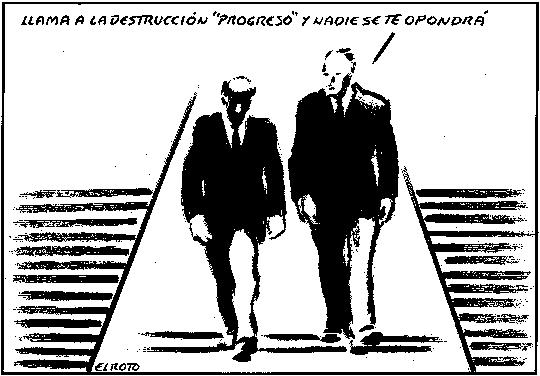
En su viñeta de hoy El Roto, el mejor editorialista del diario El País, nos enseña un constructor dando consejo a un alcalde "Llama a la destrucción 'progreso' y nadie se te opondrá".

Perfecta ilustración de la situación escandalosa en Navas del Marqués descrita en este blog el domingo pasado, y del analfabestismo ambiental operante por toda la peninsula ibérica.

Esta noche, el Secretario General de ADENA Juan Carlos del Olmo y Carlos Bravo de la asociación ecologista Centaurea me informaron (después de leer mi "España bananera") de que por fin pararon ayer al mediodía las máquinas gracias a la actuación del Fiscal de Medio Ambiente. Pero leyendo esta mañana en El País las declaraciones del Alcalde de aquel pueblo, es evidente que esta lucha va para largo. ¿Cómo es posible que cualquier crétino pueda ser alcalde en este país? Para conducir un coche, tienes que aprender el código de circulación. Pero para conducir un pueblo, no te exigen nada. Algo falla.

También ayer, se presentó en Madrid el informe anual del Observatorio de la Sostenibilidad creado a iniciativa de nuestro amigo Domingo Jímenez Beltrán. Según dicho informe, España pierde cada año 50.000 hectáreas naturales por la construcción, lo cual equivale a la superficie de 50.000 campos de fútbol.

El mes pasado en París, un ex-alto cargo de la administración francesa y del Programa de Naciones Unidas para el Medio Ambiente me decía, medio en broma: "Cómo redactor de la Ley de Protección del Litoral en Francia y del consecuente éxodo de constructoras a España, yo tengo la impresión de ser en cierta medida el padre del 'milagro económico' español".

¿Milagro español? Cómo deciamos en nuestra época misianica en los años 70: cuando habrá muerto el último pez, caído el último árbol, secado el último río...entonces el hombre se dará cuenta de que el dinero no se come.


Monday, October 09, 2006

Nuclear test: what should we do?


When I read that the North Korean authorities claim that their underground nuclear test has not "resulted in any leak of radiation", what comes immediately to my mind is this photo of the venting of the US Baneberry "underground" test in the Nevada desert in 1970. Greenpeace was the first, in 1981, to leak this now iconic picture; it was Allan Thornton (from Greenpeace at the time) who put his hand on it in Washington DC.

The use of nuclear weapons explosions for political and "diplomatic" purposes is always appauling. In all circumstances.

So, North Korea's nuclear test today is deeply distressing.

In the coming hours, we shall hear a lot of condemnations on the part of the international community and individual governments of course.

What could have been the most effective response in the last few days when North Korea threatened to perform its nuclear test?

Wouldn't it have been for the US and Chinese governments to announce that they would ratify the Comprehensive Test Ban Treaty (CTBT) of 24 September 1996?

Annex 2 to the Treaty contains the list of signatories that need to ratify for it to enter into force. Most of them have now ratified. With the exception of: China, Colombia, Egypt, Indonesia, Iran, Israel, and the USA.

It would have been nice to celebrate this year's 60th anniversary of Hiroshima and Nagasaki, and 10th anniversary of the signature of the CTBT with the treaty's entry into force.

It would have given the moral high ground to those who will be prompt in condemning today's nuclear explosion in North Korea, but who yet have not banned nuclear testing themselves.

Sunday, October 08, 2006

España bananera


Muchos españoles suelen utilizar un neologismo, que no me gusta nada por el desprecio y la ignorancia que revela hacía países y gente que no tienen la misma suerte que los habitantes del mal llamado Primer Mundo: cuando constatan o comentan una chapuza o un hecho anticuado, muchos Españoles dicen que es tercermundista.

Por ejemplo:

Aquel barrio periférico marginal, ¡tercermundista!
Ese programa de televisión basura, ¡tercermundista!
Tal basurero contaminante, ¡tercermundista!
Los vertidos salvajes tan frecuentes en toda la geografía española, ¡tercermundistas!
El caos circulatorio en casi todas las ciudades españolas, ¡tercermundista!

Y por supuesto cuando los alcaldes de una comarca se ligan para reclamar una autovía que les permita meterse un buen paquete en los bolsillos con la recalificación de terrenos y permitir la invasión de ladrillos y cemento y la proliferación de campos de golf insostenibles, te explican que, claro, la antigua carretera es tercermundista.

Tercermundista, para la España negra, es el insulto supremo. Y sirve para justificar lo injustificable.

[Yo no se si algún Roland Barthes español ha analizado lo que se esconde detrás de esta fea expresión; yo supongo que para muchos se trata de quitarse subconscientemente las penas y las responsabilidades: ¿Porque plantearse cambiar esas malas costumbres, si son tercermundistas? Cómo sabe todo el mundo, España es miembro de la OECD, el club de los ricos desde 1960; ¡No me mires; mira al vecino!, yo no tengo nada que ver con eso.]

¿A qué viene todo esto?

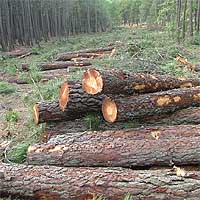
Mientras España (y sus municipios) recibe fondos de la Unión Europea para llevar a cabo programas de conservación de la biodiversidad (de las cigueñas negras entre otras especies y de habitats vulnerables), unos alcaldes y empresarios sin escrupulos se permiten tirarlo todo por la borda. En el territorio español, andan sueltas bandas de delincuentes que no dudan en arrasar lo que les apetezca a toda costa, incluso a costa de la Ley. Y ¡no pasa nada!

Hace dos días, yo tuve la alegría de mandar un email de enhorabuena a mi amigo Luis Santiago Cano, uno de los biólogos que más han hecho (y hacen pese a las trabas) para que sobreviva la cigueña negra. Yo le mande este email inmediatamente después de enterarme que para salvaguardar la especie a la cual él ha dedicado su vida, el Tribunal Superior de Justicia había ordenado la paralización de un proyecto faráonico e insostenible; un proyecto como ya casi se ven sólo en España dentro del territorio de la Unión Europea [tomen nota: no he dicho proyecto tercermundista].

Pero esta mañana, yo me enteré por el diario El País que como respuesta desafiante a la sentencia del Tribunal Superior de Justicia, las máquinas se han puesto en marcha, y empezaron a talar más de mil arboles, aparentemente sin que la Guardia Civil supiera o quisiese parar este flagrante delito. Estamos en plena política de hechos consumados: "¡Aquí no hay ni cigueñas negras ni leches, veán Señores, aquí no queda náa!".

[Con la nueva Ley de Montes que dificulta la recalificación de terrenos quemados, ¿el bulldozer y la motosierra reemplazan el mechero?]

Yo me acuerdo que cuando yo daba mis primeros pasos por España, en la época de la Transición democrática, se hablaba (con la mirada optimista hacia el futuro) del hormigón franquista, para significar que el expolio de la costa y del resto de la naturaleza era cosa del pasado.

Treinta años después, duele decir que el hormigón democrático no es mejor.


Tuesday, October 03, 2006

Green Bush


Environmentalists all over the world will be amazed to hear the news.

George Bush is taking the green side on a global environmental issue!

What is more, perhaps:

He is asking the United Nations to do something about it!

And he is receiving praise from 60+ environmental NGOs worldwide.

I always say that the United States are a country capable of the best, and the worst. Against all odds, that country remains a strange mix of the best and the worst values. The whole country is a paradox.

Anyway, perhaps today I never felt so good about that country since Jimmy Carter was running it.

I said perhaps.

Monday, October 02, 2006

Resurfacing Rainbow


Yesterday around lunch time, friends from the Greenpeace diaspora started to bombard my BlackBerry with emails: the story that the brother of the French presidential candidate Ségolène Royal had been a member of the team that sank the Rainbow Warrior twenty-one years ago in Auckland, New Zealand had suddenly become headline news in France and New Zealand.

[The information was published Chez Rémi exactly one month ago]

The resurgence of this story in the middle of the French Socialist Party primaries has a taste of dirty politics. Like the entire twenty-one year old Rainbow Warrior affair.

Of course, Ségolène Royal cannot be blamed for what her brother was doing twenty-one years ago. [She can't be admired for it either; I say that because -- let's face it -- all those in France who thought it was right to sink the Rainbow Warrior have not vanished]. But the story does remind voters that she was herself at the time serving in the Elysée Palace as adviser to President Mitterrand, and that another French Socialist Party primaries contender, Laurent Fabius, was the Prime Minister when the Rainbow Warrior was sunk.

It is hard to anticipate today whether the Rainbow Warrior will stay or not in the landscape of the current French presidential race. But rather than watching from the side, the French Green Party (and maybe French environmentalists as well) could take the resurgence of the Rainbow Warrior as an opportunity to call upon the Socialist Party and other candidates to commit to giving priority to the universal adoption and implementation of one of the most important legacies of the Rainbow Warrior, the Comprehensive Nuclear Test Ban Treaty (CTBT), and the thirteen steps to prevent nuclear weapons proliferation that were agreed by the Review Conference of the Parties to the Treaty on the Proliferation of Nuclear Weapons (NPT). With the Bush administration's preventive war and counter-proliferation doctrine against the non-proliferation regime, and with so many candidates at the threshold to become Nuclear Weapons States, this would be an opportune way for French mainstream politicians to exorcize (once and for all?) the ghost of the Rainbow Warrior.

The world (including France) has changed considerably since 1985. But it is amazing to see how the Rainbow Warrior continues to haunt French politics so many years later. As former Rainbow Warrior crew member in its very early days, and as a French man, I can't help but find it almost fascinating.

In 1998, I was in Lisbon on another Greenpeace ship, the Sirius, and we welcomed on board the mother and the sister of Fernando Pereira, the Portuguese photographer who was killed by the French Secret Services' bomb placed on the hull of the Rainbow Warrior in 1985. Because the visit took place on 10 July, on the anniversary of the bombing, it was an intensely moving moment that I will never forget. With Ségolène Royal putting so much emphasis on family values in her electoral campaign, maybe she could pay a visit to Fernando's family, next time she's in Lisbon. She'd learn something.